Wharton Crossing
A 487-ACRE MASTER-PLANNED MIXED-USE DEVELOPMENT
Along Texas’ Expanding I-69 Growth Corridor
Master-Planned Opportunity coming soon
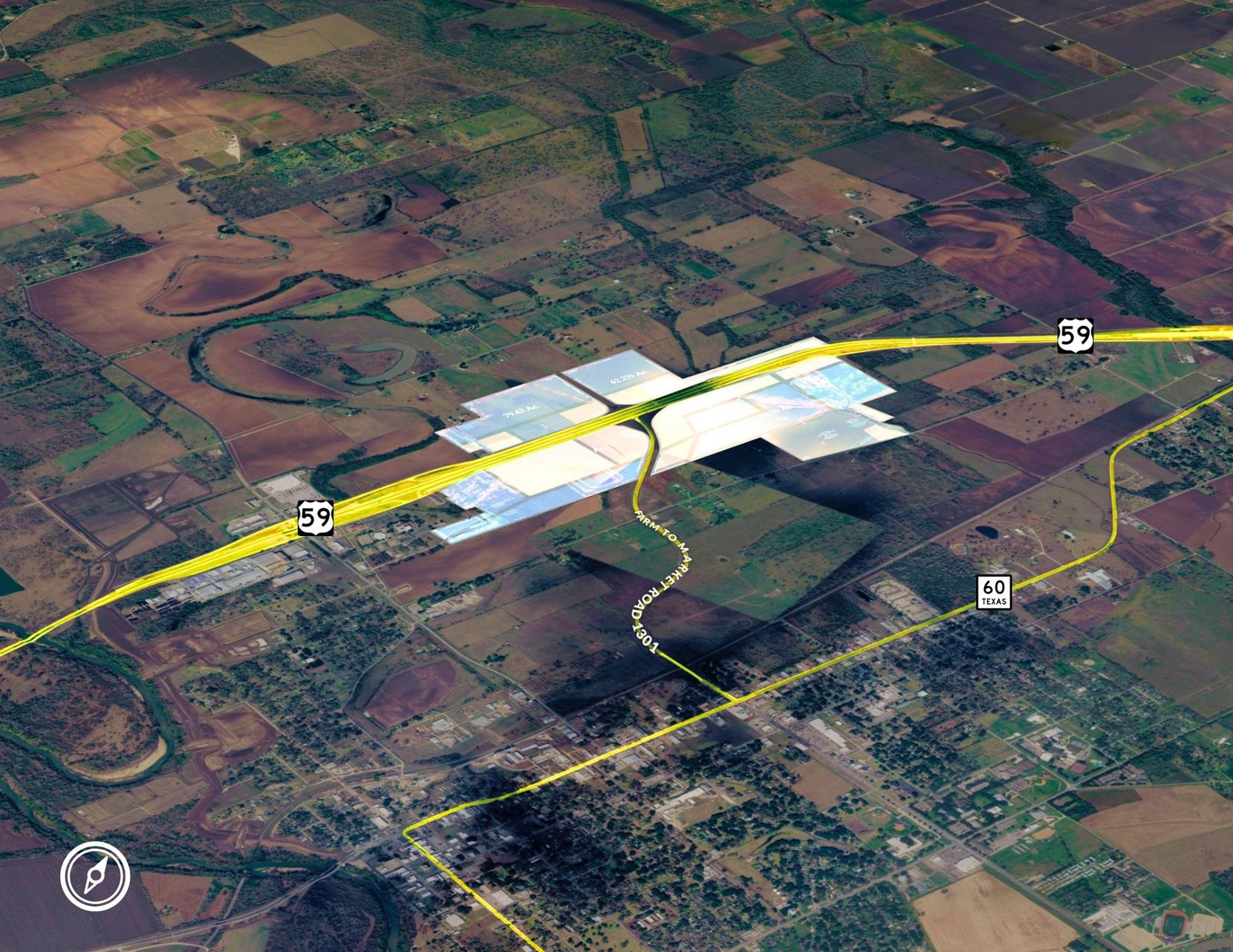
A New Regional Growth Center for South Texas
Wharton Crossing is envisioned as a next-generation mixed-use district strategically positioned to support the accelerating transformation of the I-69 corridor southwest of Houston.
Driven by expanding infrastructure investment, emerging industrial and logistics demand, and large-scale technology-related development throughout the region, the project is designed to create an integrated environment for commerce, housing, hospitality, and employment growth.
At nearly 500 acres, the development has the scale to become a long-term regional destination — combining retail, residential, industrial, hospitality, and commercial uses within a unified master plan designed for sustainable growth and regional economic impact.
Wharton Crossing represents a rare opportunity to establish a future-oriented commercial and residential hub at the intersection of infrastructure, industry, and community development.

Lot Size
±487 Acres

Property Type:
Mixed-Use Development Opportunity

Zoning:
Conceptual Planned Development
Property Summary

Building Size:
I-69 Expansion Corridor

Opportunity Zone
Yes
Positioned Within an Emerging Economic Corridor
The I-69 corridor is rapidly evolving into a strategic center for industrial expansion, logistics activity, digital infrastructure investment, and regional workforce growth.
Wharton Crossing is positioned to capitalize on several major regional growth drivers:
Infrastructure Expansion
Ongoing I-69 corridor improvements continue to strengthen regional connectivity between Houston, South Texas, and key North American trade routes.
Technology & Data Infrastructure
Large-scale data infrastructure projects and related energy investment are driving long-term employment demand and commercial expansion throughout the corridor.
Industrial & Logistics Growth
The region’s accessibility, land availability, and infrastructure positioning continue to attract industrial, distribution, and logistics-related users seeking long-term expansion opportunities.
Workforce & Housing Demand
Projected employment growth is expected to increase demand for workforce housing, retail services, hospitality, healthcare, and supporting commercial development throughout the market.
Regional Connectivity at the Center of Future Growth
Wharton Crossing is strategically positioned along the future Interstate 69 corridor, providing direct regional access to Houston, the Gulf Coast, and major North American trade routes.
The project benefits from:
- Immediate access to US-59 / future I-69
- Connectivity to Houston’s industrial and logistics network
- Access to regional labor and workforce markets
- Proximity to expanding industrial and technology investment
- Strategic positioning within a major freight and transportation corridor
As infrastructure investment continues throughout the region, the development is uniquely positioned to serve as a commercial and residential gateway for future growth across Wharton County and the broader South Texas market.
An Integrated Mixed-Use Environment
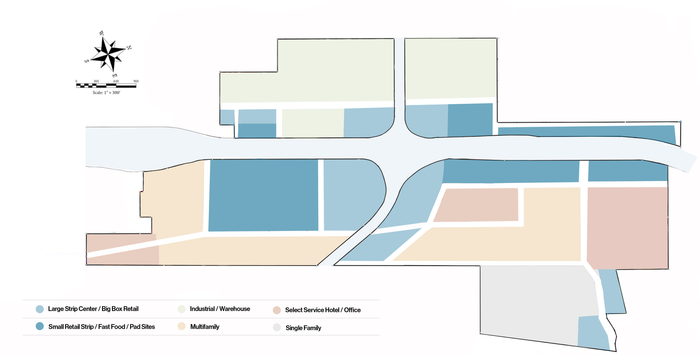
Wharton Crossing is designed as a fully integrated mixed-use district supporting long-term commercial, residential, and economic growth.
Retail & Dining
Regional retail, restaurants, entertainment, and service-oriented commercial uses designed to serve both residents and corridor traffic.
Multifamily & Residential
A mix of workforce housing, multifamily communities, and residential neighborhoods supporting future population growth.
Industrial & Commercial
Flexible industrial, logistics, office, and commercial space positioned to support regional employers and expanding business activity.
Hospitality
Hotel and hospitality opportunities designed to support corporate visitors, workforce demand, and regional travel activity.
Community & Services
Future healthcare, education, and service-oriented uses supporting long-term community development.
A Vision for Coordinated Regional Growth
The Wharton Crossing master plan is designed to create a balanced and scalable development environment integrating commercial, residential, industrial, hospitality, and community-oriented uses.
The plan emphasizes:
- Strategic corridor visibility
- Efficient transportation access
- Walkable commercial nodes
- Long-term scalability
- Integrated infrastructure planning
- Flexible development opportunities
The development framework allows the project to evolve in phases while maintaining a cohesive long-term vision for the corridor.
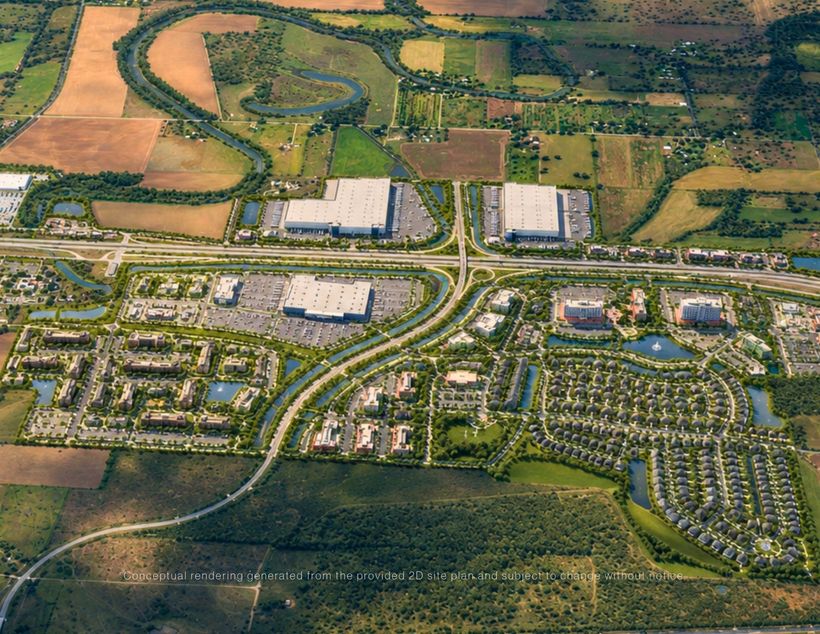
Infrastructure Positioned for Long-Term Growth
Wharton Crossing is designed to support scalable long-term development through coordinated infrastructure planning and strategic corridor access.
Key infrastructure considerations include:
- Regional highway connectivity via future I-69
- Planned roadway improvements
- Utility accessibility and expansion potential
- Fiber and telecommunications infrastructure
- Water and wastewater planning
- Long-term development scalability
The project’s scale and location create the opportunity for coordinated infrastructure investment capable of supporting future residential, commercial, industrial, and hospitality uses.
A Catalyst for Regional Economic Growth
Wharton Crossing is positioned to become a significant long-term economic driver for Wharton County and the broader South Texas region.
The development is expected to support:
- New job creation
- Expanded tax base growth
- Increased retail and commercial activity
- Workforce housing development
- Regional business attraction
- Long-term infrastructure investment
As the I-69 corridor continues to evolve, the project has the potential to become a central hub for commerce, employment, and community growth throughout the region.
Planned Multi-Phase Development Strategy
Wharton Crossing is envisioned as a phased mixed-use development designed to align with regional infrastructure investment, market demand, and long-term economic growth.
Future development phases are expected to include:
- Initial commercial and infrastructure activation
- Retail and hospitality expansion
- Residential and workforce housing growth
- Industrial and employment-oriented development
- Long-term mixed-use district buildout
Detailed phasing strategies will continue to evolve alongside market conditions and development partnerships.
Contact Us
Contact Us
We will get back to you as soon as possible.
Please try again later.
Contact Us
We will get back to you as soon as possible.
Please try again later.